

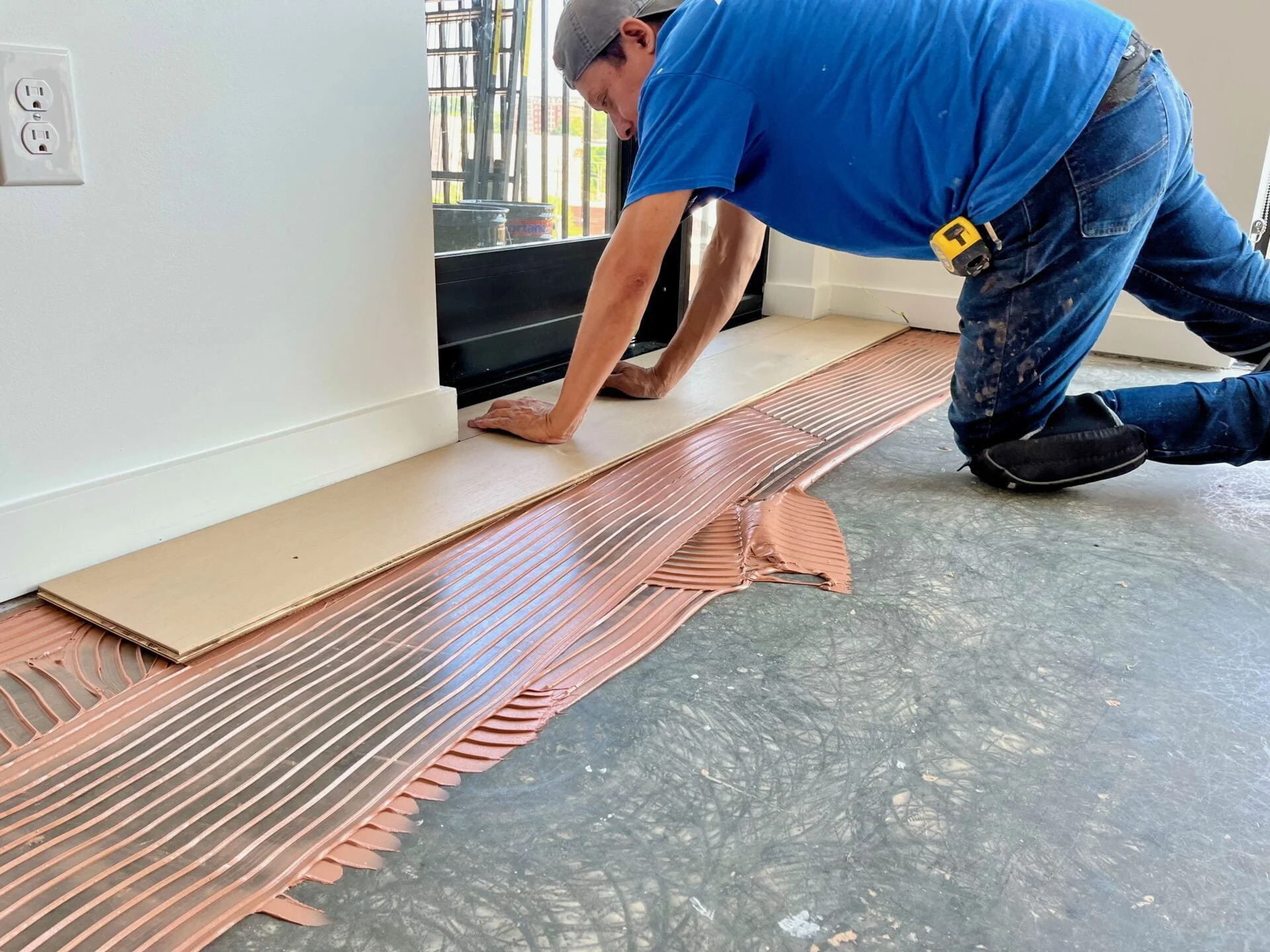
Hardwood flooring is a long-term investment that should look beautiful on day one and perform just as well years down the line. However, there is one critical step that often gets overlooked before the hardwood flooring installation begins. That step is acclimation. If this process is rushed or skipped, even the highest-quality hardwood can run into serious problems.
At Cameron The Sandman, we have been serving the Detroit area since 1936. Over the decades, we have seen firsthand how proper preparation can make or break a flooring project. Acclimation is not just a recommendation. It is a necessary step that protects your flooring, your home, and your investment.
What is hardwood floor acclimation?
Hardwood floor acclimation is the process of allowing wood flooring materials to adjust to the temperature and humidity conditions inside your home before installation begins.
Wood naturally reacts to its environment. It expands when it absorbs moisture and contracts when it loses moisture. This movement is completely normal, but it becomes a problem when flooring is installed before it has stabilized.
When hardwood arrives at your home, it has likely been stored or transported in different conditions. If it is installed immediately, it will begin to expand or shrink after installation, which can cause visible damage. Acclimation allows the wood to reach a balance with your indoor environment so that it performs properly once installed.
Why does acclimation matter before installation?
Acclimation plays a major role in how your hardwood floor will look and perform over time. When this step is done correctly, your flooring will remain stable and consistent. When it is ignored, problems can appear quickly and often require costly repairs.
Here are some of the most common issues that can occur without proper acclimation:
Gapping between planks: When hardwood shrinks after installation, spaces can form between boards. These gaps can affect both the appearance and performance of your floor.
Cupping or crowning: Moisture imbalance can cause the edges or centers of boards to rise. This creates an uneven surface that can be seen and felt.
Buckling: Excess moisture can cause boards to lift away from the subfloor. This is one of the most severe issues and may require full replacement.
Premature wear and finish damage: Constant movement in the wood can lead to cracks in the finish and faster overall wear.
We take a proactive approach to every hardwood flooring installation because preventing these issues is always better than fixing them later.
How long should hardwood flooring acclimate?
The amount of time required for acclimation can vary depending on several factors, but most hardwood flooring needs at least three to seven days to properly adjust. In some cases, the process may take longer.
The following factors influence acclimation time:
The type of wood species
Whether the product is solid or engineered hardwood
Indoor humidity levels
Seasonal weather changes in Michigan
Whether your heating and cooling systems are running consistently
In the Detroit area, seasonal changes can be significant. Winters tend to be dry, while summers bring higher humidity. Because of this, acclimation is especially important to ensure long-term stability.
Our team measures moisture levels in both the flooring and the subfloor before installation begins. This ensures that everything is properly balanced and ready.
What conditions are ideal for acclimation?
For acclimation to be effective, your home must reflect normal, lived-in conditions. This means that temperature and humidity levels should be stable before the flooring arrives.
Ideal conditions include:
A functioning HVAC system that maintains consistent indoor conditions
Indoor temperatures between 60 and 80 degrees
Humidity levels between 30 and 50 percent
If your home is still under construction or undergoing major renovations, acclimation should be delayed until conditions are stable. Installing hardwood flooring in an unstable environment increases the risk of long-term issues.
We guide our clients through this process to ensure that everything is set up for success before installation begins.
How do professionals handle acclimation?
Proper acclimation involves more than simply placing boxes of flooring inside a room. It requires a structured process that allows air to circulate and moisture levels to be monitored.
Here is how we approach acclimation:
We deliver flooring materials directly into the installation space
We open or cross-stack the boxes when necessary to promote airflow
We use professional tools to measure moisture levels in both the flooring and subfloor
We monitor conditions over several days to ensure stability
We confirm that moisture levels are within acceptable ranges before beginning the hardwood floor installation
This level of preparation is part of our commitment to quality. We take the time to do things correctly so that your flooring performs the way it should.
What happens if acclimation is skipped?
Skipping acclimation might save time upfront, but it often leads to bigger problems later. Some issues may appear within weeks, while others develop over time as seasons change.
You may experience:
Gaps forming between boards
Warping or uneven surfaces
Movement or noise when walking on the floor
The need for early repairs or refinishing
In more serious cases, entire sections of flooring may need to be replaced.
Does engineered hardwood need acclimation too?
Engineered hardwood is designed to be more stable than solid hardwood due to its layered construction. However, it is still made from real wood and remains sensitive to environmental changes.
While engineered products may require less acclimation time, the process should never be skipped entirely.
We evaluate each flooring product and follow manufacturer recommendations to ensure proper installation and long-term performance.
How does acclimation protect your investment?
Hardwood flooring adds value, comfort, and style to your home. However, its performance depends heavily on how it is installed.
Acclimation helps protect your investment by:
Extending the lifespan of your flooring
Maintaining a consistent and attractive appearance
Reducing the risk of damage and repairs
Supporting long-term durability
Helping preserve manufacturer warranties
We believe that quality results begin with proper preparation. Acclimation is one of the most important steps in that process.
Your experts on hardwood flooring installations Farmington Hills, MI
If you are planning a hardwood flooring installation project, our team is ready to help. We will guide you through every step of the process, from selecting the right product to ensuring proper acclimation and expert installation. We're located in Farmington Hills, MI, and we serve the Detroit area, including Livingston County, Oakland County, Washtenaw County, and Wayne County. Let us help you create a hardwood floor that delivers lasting beauty, performance, and value.